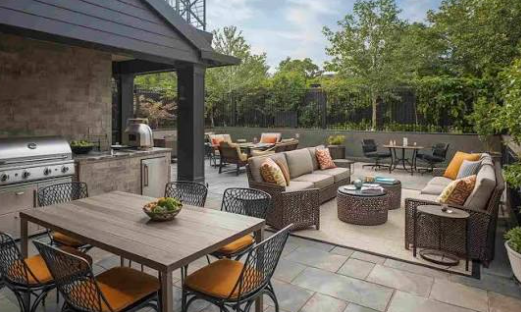
A rooftop does not need an elaborate design to become a comfortable and attractive outdoor space. With a few well-placed planters, simple furniture, practical shade, and low-maintenance plants, even a small roof can feel like a private garden above the city.
The best Simple Rooftop Garden Ideas focus on function, easy maintenance, and efficient use of space. Instead of filling the roof with too many decorative elements, choose a clear layout and a limited number of materials and plants. This keeps the garden organized while making it easier to care for throughout the year.
Start With a Simple Layout
Before buying plants or furniture, decide how you want to use the rooftop.
Most simple rooftop gardens need only two or three main zones, such as:
- Seating
- Planting
- Dining
Keeping the layout straightforward prevents the space from feeling crowded.
Place the largest furniture pieces first, then add planters around them. Leave clear pathways between the entrance, seating area, and other functional zones.
In a small rooftop garden, fewer larger elements often work better than many small ones.
Use Containers Instead of Complex Planting Beds
Container gardening is one of the easiest ways to create a rooftop garden.
Planters allow you to control soil conditions, move plants when necessary, and organize the garden without building permanent beds.
Use a combination of medium and large containers rather than dozens of small pots.
Large planters can hold shrubs, ornamental grasses, small trees, or groups of flowering plants.
Choose containers with proper drainage and materials suitable for outdoor use.
Lightweight planters may be especially useful on rooftops because wet soil can become heavy.
Choose Low-Maintenance Plants
Simple rooftop gardens should be easy to care for.
Select plants that are suited to local temperatures, sunlight, and wind exposure.
Drought-tolerant plants are often useful because rooftop containers can dry out quickly.
Depending on the climate, suitable options may include:
- Ornamental grasses
- Lavender
- Rosemary
- Sedum
- Succulents
- Hardy herbs
- Compact shrubs
Native or regionally adapted plants can also reduce maintenance because they are better suited to local conditions.
Avoid choosing plants simply because they look attractive in a garden center. Consider how they will perform in the more exposed rooftop environment.
Create a Small Seating Area
A rooftop garden becomes much more useful when there is somewhere comfortable to sit.
A small outdoor sofa, two chairs, or a simple bench may be enough.
In compact spaces, choose furniture with slim frames so it does not dominate the garden.
A bench against a wall or planter can save space.
Folding chairs and tables are also useful because they can be moved or stored when necessary.
Keep seating close to the main planting area so greenery becomes part of the view.
Add a Small Outdoor Table
A simple table can make the rooftop suitable for coffee, meals, reading, or working outdoors.
A round table often works well in smaller spaces because it takes up less visual room and allows easier movement around it.
For very small rooftops, a folding table or narrow wall-mounted surface can provide useful space without permanently occupying the floor.
Choose weather-resistant materials that require little maintenance.
Use Vertical Space
When floor space is limited, take advantage of walls and vertical surfaces.
A trellis can support climbing plants while using very little ground area.
Wall-mounted planters can hold herbs or smaller ornamental plants.
You can also place tall narrow planters along one side of the roof.
Vertical gardening helps create more greenery without filling the central area with containers.
Keep the system simple enough that watering and pruning remain easy.
Create Privacy With Plants
Urban rooftops often face nearby buildings or windows.
Plants can provide privacy while maintaining a softer appearance than solid barriers.
Tall ornamental grasses, shrubs, climbing plants, or bamboo grown in containers can help screen views.
Arrange taller plants around the perimeter and keep lower plants closer to the seating area.
Avoid completely blocking airflow, particularly on exposed roofs.
A combination of plants and a lightweight screen can provide privacy without making the rooftop feel enclosed.
Add Shade Without Overcomplicating the Design
Rooftops can become very hot because they receive direct sunlight for long periods.
A large outdoor umbrella is one of the simplest shade solutions.
It can be moved when needed and usually requires less installation than a permanent structure.
Shade sails can also work well where secure attachment points are available.
For larger rooftops, a simple pergola can define the seating or dining area.
Permanent structures should be properly designed for rooftop wind conditions and building requirements.
Grow a Small Herb Garden
You do not need a large vegetable garden to make the rooftop productive.
A few containers of herbs can provide both greenery and useful ingredients.
Consider growing:
- Basil
- Mint
- Parsley
- Rosemary
- Thyme
- Chives
Place herbs near the seating or dining area so they are easy to reach.
Many herbs grow well in containers, but their light and watering needs vary, so group plants with similar requirements together.
Use Raised Planters Along the Edges
Long raised planters can keep the center of the rooftop open.
Place them along walls or perimeter areas to create continuous planting zones.
Raised planters can contain grasses, herbs, flowers, or compact shrubs.
They can also help define boundaries between different areas.
Before installing large beds, consider the combined weight of the planter, soil, plants, and water. Structural capacity should be checked for substantial installations.
Keep the Plant Palette Limited
Using too many different plants can make a small rooftop look busy.
A simpler approach is to choose a few species and repeat them throughout the garden.
For example, you might use ornamental grasses in several planters, lavender in smaller containers, and one or two shrubs for height.
Repetition creates consistency and makes the garden easier to maintain.
It also gives the rooftop a more organized appearance.
Add a Few Flowering Plants
A simple rooftop garden does not need to be entirely green.
Flowering plants can introduce seasonal color.
Place a few flowering containers near the seating area or entrance.
Instead of using many different colors, choose one or two tones that work with the surrounding furniture and planters.
This keeps the design calm while still adding visual interest.
Use Easy-to-Maintain Flooring
The existing rooftop surface may be perfectly usable, especially if the garden is simple.
If you want to soften the space, outdoor deck tiles can create a warmer appearance without requiring a complete redesign.
An outdoor rug can also define the seating area.
Whatever flooring is used, it should not block drainage or make access to roof maintenance areas difficult.
Avoid covering drains with furniture or planters.
Plan for Easy Watering
Watering is one of the biggest practical challenges in a rooftop garden.
For a few containers, a watering can or hose may be enough.
For larger collections of plants, a simple drip irrigation system can reduce daily work.
Place plants with similar water needs together.
This makes watering more efficient and reduces the chance of giving some plants too much or too little water.
Check soil regularly during hot or windy weather because containers can dry much faster than garden beds at ground level.
Keep Drainage Areas Clear
Good drainage is essential.
Every planter should have drainage holes, and excess water must be able to move away from the planting area.
Do not place large containers directly over roof drains.
Leaves, soil, and other debris should also be removed regularly so drainage channels remain open.
For larger rooftop garden projects, waterproofing and drainage systems may require professional assessment.
Simple planting does not remove the need to protect the building beneath it.
Add Soft Lighting for Evenings
A few small lights can make the rooftop usable after sunset.
There is no need for complicated lighting systems.
Consider:
- Outdoor table lamps
- Solar lights
- Lanterns
- Wall lights
- Low path lights
Place lighting where it improves safety and comfort rather than trying to illuminate every part of the roof.
Soft lighting around seating and planting often creates a more relaxed atmosphere than bright overhead fixtures.
Use Storage Furniture
Rooftops often need somewhere to store cushions, gardening tools, and small accessories.
A storage bench can provide seating and hidden storage at the same time.
Weather-resistant boxes can also be placed against walls or underneath tables.
Keeping supplies organized helps maintain the clean appearance of a simple rooftop garden.
Avoid leaving lightweight objects loose in exposed areas where wind may move them.
Let One Plant Become the Focal Point
A simple garden can still have a strong visual feature.
Instead of adding multiple decorative objects, choose one larger plant or small tree as a focal point.
A sculptural shrub, ornamental grass, olive tree, or another climate-appropriate specimen can become the central feature of the garden.
Place it in a larger planter near the seating area or at the end of an important sightline.
A single strong feature often has more impact than many small decorations.
Avoid Overdecorating the Rooftop
Simplicity is one of the greatest strengths of a rooftop garden.
Too many planters, decorative objects, cushions, furniture pieces, and accessories can quickly make a limited area feel cluttered.
Leave some empty floor space.
Choose functional objects first and add decoration only where it improves the overall design.
Plants themselves should provide much of the visual interest.
This makes the garden feel more natural and keeps maintenance manageable.
Consider Weight and Wind
Even a simple rooftop garden requires attention to building conditions.
Soil, wet planters, furniture, large plants, and structures all add weight.
Before adding heavy raised beds, large trees, water features, or permanent structures, have the roof’s load capacity checked by a qualified professional.
Wind is another important consideration.
Use stable furniture and planters, and avoid placing lightweight decorative objects in exposed areas.
Tall plants should also be suitable for windy conditions.
Build a Rooftop Garden That Is Easy to Enjoy
The most effective Simple Rooftop Garden Ideas are based on restraint and practicality.
A few large planters, resilient plants, comfortable seating, simple shade, and basic lighting may be all that is needed to transform an unused rooftop into an enjoyable outdoor space.
Start small and add features only when they serve a clear purpose. Keep the plant palette limited, maintain clear pathways, protect drainage, and choose materials that can handle outdoor conditions.
A rooftop garden does not need to be elaborate to feel inviting. With thoughtful planning and a simple layout, even a modest roof can become a relaxing green space for reading, dining, gardening, or enjoying time outdoors.