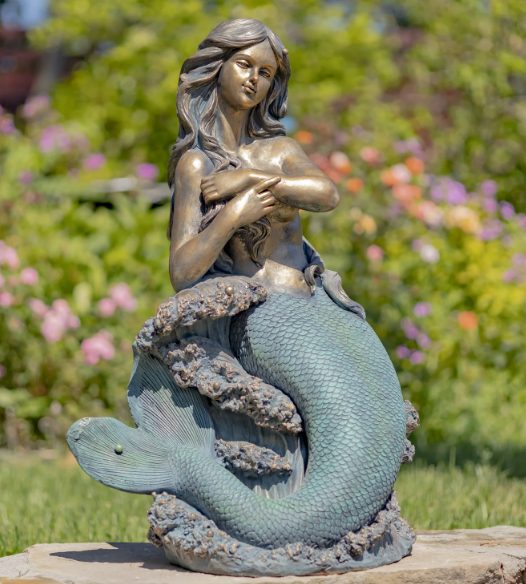
Mermaid sculptures are outdoor garden decorations with marine cultural characteristics and fairytale art style. Their unique shape, combining a female upper body with a fish tail, allows them to blend naturally into water gardens, private courtyards, seaside resorts, and public landscape spaces. Compared to traditional human figure sculptures, mermaid sculptures offer more possibilities in terms of pose design, environmental integration, and thematic expression. In garden design, the appropriate selection of the sculpture’s shape, material, size, and placement helps create a layered and thematically complete landscape environment.
1. Common Forms of Outdoor Mermaid Sculptures
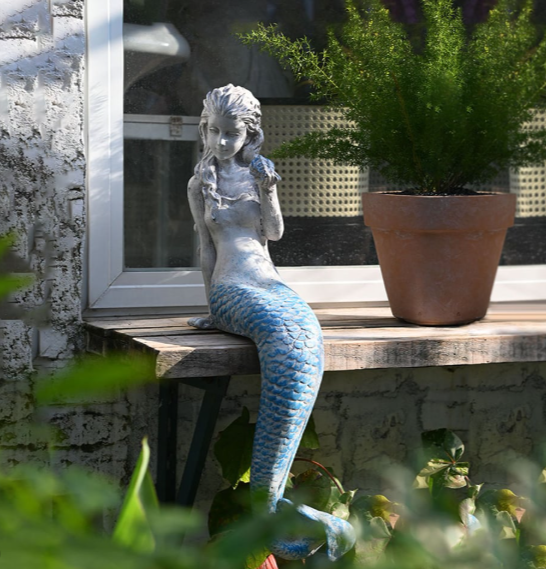
Outdoor mermaid sculptures come in various forms, including seated on rocks, reclining, swimming, and holding seashells. Different poses are suitable for different garden spaces and landscape themes.
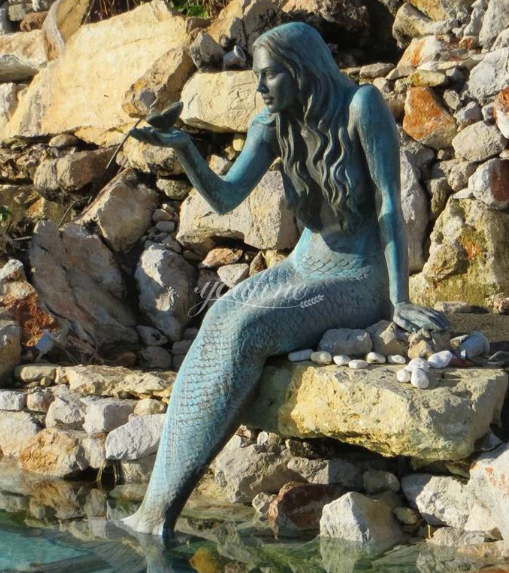
A mermaid seated on a rock is a classic form, with her upper body upright or slightly tilted, and her fish tail naturally curving along the rock. This style is suitable for placement along pond edges, garden water features, and coastal landscape areas.
For example, the Mermaid on a Rock Statue combines a human figure’s posture, a fish tail structure, and a rock base, allowing the sculpture to visually connect with natural rocks, aquatic plants, and the surrounding landscape.
A swimming mermaid emphasizes body curves and a sense of movement, suitable for ocean-themed areas. Mermaids holding seashells or water jugs can be integrated with a water supply system to create a garden fountain with actual water spray functionality.
2. Which garden spaces are suitable for outdoor mermaid sculptures?
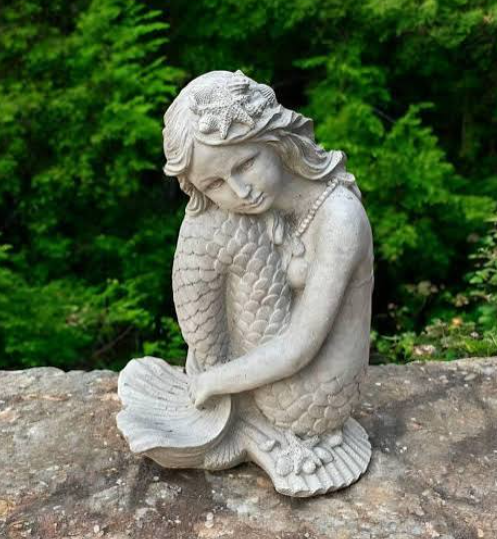
In private gardens, mermaid sculptures can be placed near flower beds, lawns, or courtyard pools as a visual focal point. For smaller courtyards, choosing a moderately sized sculpture can avoid decorations taking up too much space.
In water gardens, mermaid sculptures are suitable for pairing with ponds, artificial streams, waterfalls, and natural rocks. Plants such as water lilies, irises, and ornamental grasses can enrich the natural environment around the sculpture.
Seaside hotels and resorts can place mermaid sculptures around pools, along seaside promenades, and in relaxation courtyards to maintain consistency with the ocean theme.
In addition, mermaid imagery can be used to create story-driven landscape scenes in fairytale theme parks, children’s gardens, and public leisure squares.
3. How to Choose the Right Sculpture Material for Outdoor Environments?
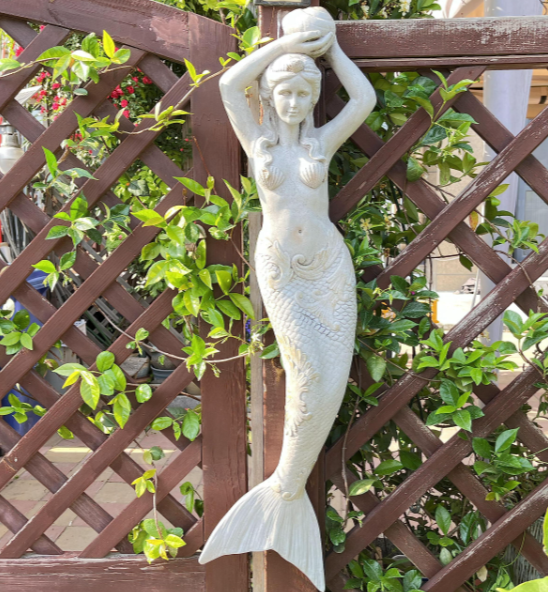
Fiberglass, bronze, natural stone, and resin composites are common materials for mermaid sculptures.
Fiberglass is relatively lightweight, flexible in shape, and easy to paint, allowing for detailed depictions of facial features, hair, fish tail scales, and tail fins. It is suitable for colorful fairytale landscapes and ocean-themed spaces. For long-term outdoor use, attention should be paid to the weather resistance and UV resistance of the surface coating.
Bronze has good durability and is suitable for creating classical or realistic mermaid sculptures, but proper maintenance is still required in high humidity and coastal environments.
Natural stone has a strong natural texture and is suitable for pairing with rocks, pools, and classical garden architecture, but the weight of the sculpture, the water absorption of the stone, and the load-bearing capacity of the foundation must be considered.
Resin composites are more suitable for small garden ornaments; when purchasing, it should be confirmed whether the product is suitable for long-term outdoor display.
4. Garden Design Tips for Mermaid Sculptures
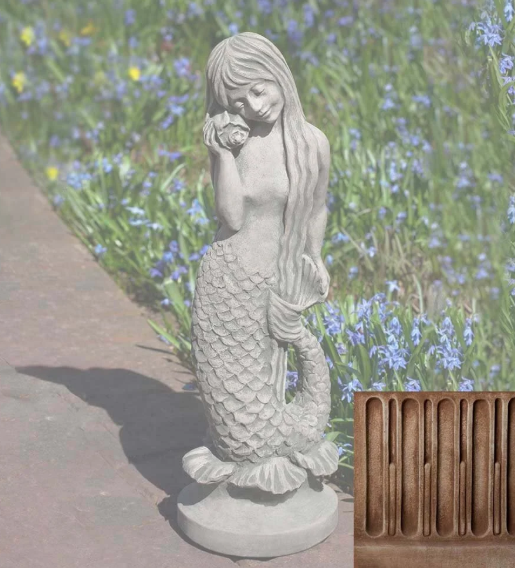
The placement of mermaid sculptures should fully consider spatial proportions, viewing angles, and the surrounding environment. Large sculptures are suitable as the main visual center in open landscapes, while smaller sculptures can serve as decorations along flower beds, ponds, or garden paths.
For plant selection, ferns, low shrubs, and ornamental grasses can be chosen to create a landscape background with natural layers. Sculptures near ponds can be paired with pebbles, natural rocks, and aquatic plants to reinforce the ocean or water theme.
In terms of color, painted mermaids are suitable for fairytale gardens and leisure spaces, while bronze, white, and natural stone tones are more suitable for classical courtyards and naturalistic gardens.
Avoid placing too many complex decorative elements around the sculpture, as this can weaken the distinctiveness of the main image.
5. Installation and Daily Maintenance of Outdoor Mermaid Sculptures
When installing outdoor sculptures, a suitable foundation structure should be selected based on the product’s weight, size, and center of gravity, and ground drainage, wind protection, and fixing methods should be considered. Sculptures placed near pools should also be considered for issues such as slippery ground, visitor access, and electrical safety.
Routine maintenance mainly includes cleaning dust, fallen leaves, and bird droppings, and regularly checking the surface coating, joints, and the stability of the base. In coastal areas, the impact of salt spray on metal components and surface coatings also needs to be monitored.
A well-chosen design, material selection, and landscaping can transform outdoor mermaid sculptures into unique cultural decorative elements within garden spaces, while also ensuring safety, durability, and aesthetic value for long-term display.