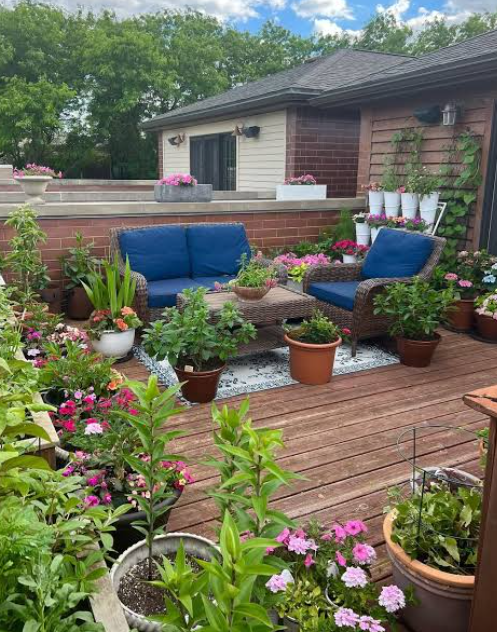
A compact rooftop can become one of the most enjoyable parts of a home when every square foot is planned carefully. Small rooftop gardens are especially useful in cities, where private yards are often limited or unavailable. Even a narrow roof terrace can provide room for plants, seating, herbs, and a quiet place to relax.
The best Rooftop Garden Ideas for Small Spaces focus on efficient use of vertical surfaces, lightweight containers, compact furniture, and plants that are suitable for exposed conditions. Rather than trying to fill every corner, a successful small rooftop garden should feel open, organized, and easy to maintain.
Keep the Layout Simple
A small rooftop works best when the layout has a clear purpose.
Decide whether the space will mainly be used for relaxing, dining, gardening, or a combination of two functions.
For example, one side of the rooftop could contain a bench and small table, while the opposite edge holds planters.
Avoid creating too many separate zones in a limited area.
A simple arrangement usually makes the rooftop feel larger and keeps pathways clear.
Use the Perimeter for Planting
One of the easiest ways to preserve open floor space is to place plants around the outer edges.
Long rectangular planters are especially useful because they can sit close to walls or railings.
They can hold ornamental grasses, herbs, flowering plants, or compact shrubs.
Keeping planting near the perimeter leaves the center available for seating and movement.
Repeating the same planter style can also create a cleaner, more coordinated appearance.
Grow Plants Vertically
Vertical gardening is particularly valuable on small rooftops.
Trellises, wall planters, freestanding frames, and climbing supports allow plants to grow upward rather than outward.
Suitable options may include:
- Climbing vines
- Herbs
- Small flowering plants
- Trailing plants
- Compact vegetables
A vertical garden can also serve as a privacy screen.
Choose a system that remains easy to water and maintain, especially if the rooftop is exposed to strong sun.
Choose Compact Outdoor Furniture
Furniture should match the scale of the rooftop.
Large sectional sofas and oversized dining sets can quickly overwhelm a small area.
Instead, consider:
- A small bench
- Two compact chairs
- A bistro table
- Folding furniture
- Slim outdoor lounge chairs
Furniture with simple frames usually makes the space feel lighter.
Pieces that can be folded or moved are especially useful if the rooftop needs to serve several purposes.
Add Built-In Seating
Built-in benches are a practical option when floor space is limited.
Place a bench against a wall or around the edge of the rooftop.
This avoids the need for several separate chairs and keeps the central area open.
Storage can also be incorporated beneath the seat.
Use it for cushions, gardening tools, small pots, or outdoor accessories.
A few removable cushions can make the bench comfortable without adding bulky furniture.
Grow Herbs in Small Containers
Herbs are ideal for compact rooftop gardens because many varieties do not require large containers.
You might grow:
- Basil
- Thyme
- Rosemary
- Parsley
- Chives
- Mint
Arrange the pots on shelves, a vertical rack, or along a sunny wall.
If you cook regularly, place herbs close to the rooftop entrance so they are easy to reach.
Be aware that some herbs, such as mint, spread quickly and are often easier to manage in their own containers.
Try Compact Vegetable Gardening
A small rooftop can still produce edible crops.
Choose vegetables that grow well in containers or vertically.
Depending on climate and sunlight, options may include tomatoes, peppers, lettuce, strawberries, beans, and radishes.
Use trellises for climbing crops so they do not spread across the floor.
Compact or dwarf varieties are especially useful.
Do not overcrowd containers, since plants still need enough soil, water, and air circulation to grow successfully.
Create Privacy Without Building Heavy Walls
Privacy can be difficult on urban rooftops, especially when neighboring buildings are close.
Plants provide a softer solution.
Tall grasses, narrow evergreen shrubs, and climbing vines can help screen unwanted views.
You can also combine planters with lightweight trellises or decorative screens.
Avoid creating a completely solid barrier unless necessary.
Partial screening often provides enough privacy while preserving airflow and openness.
Use One Larger Plant as a Focal Point
Small spaces do not need many decorative features.
One carefully selected plant can provide enough visual interest.
A small tree, large ornamental grass, sculptural shrub, or other climate-appropriate specimen can become the main focal point.
Place it in a larger planter near the seating area or in a corner that is visible from indoors.
Surrounding it with simpler planting keeps the design balanced.
Limit the Number of Plant Varieties
Too many different plants can make a small garden look disorganized.
Choose a limited palette and repeat the same species.
For example, you could use ornamental grasses for height, herbs for practical planting, and one flowering plant for seasonal color.
Repetition makes a small space feel more intentional.
It also simplifies watering, pruning, and general maintenance.
Add a Small Table for Everyday Use
A compact table can make a rooftop much more functional.
A round bistro table works well because it takes up relatively little room and allows easier movement around it.
It can serve as a place for coffee, meals, reading, or working outdoors.
If the rooftop is extremely narrow, consider a folding or wall-mounted table.
This can be stored away when additional floor space is needed.
Add Shade Where Needed
Small rooftops can become very hot because they often receive direct sunlight with little protection.
A compact umbrella may be enough to shade the main seating area.
Cantilever umbrellas can keep the supporting pole away from the center of the space.
Shade sails can also work if secure structural attachment points are available.
Permanent pergolas should only be added after considering structural loading and wind exposure.
Use an Outdoor Rug to Define the Seating Area
An outdoor rug can visually separate the seating zone from the planting area.
Choose a size that fits underneath the main furniture without covering the entire rooftop.
Neutral tones and simple patterns usually work well in compact spaces.
Make sure the rug is designed for outdoor use and does not prevent water from reaching roof drains.
Keeping drainage functional is more important than decorative coverage.
Keep the Color Palette Consistent
A limited color palette helps a small rooftop feel larger and less cluttered.
For example, you could combine green plants with neutral planters, natural wood furniture, and one accent color.
Avoid using many unrelated container colors and furniture finishes.
Consistency creates visual order.
It also allows the greenery itself to become the main feature.
Use Corners More Efficiently
Corners often provide valuable space for planting or seating.
A tall planter can fit neatly into one corner, while another could hold an L-shaped bench or compact storage unit.
Vertical planting systems are also useful in corners.
Rather than placing several small decorative objects there, use one functional feature.
This creates a cleaner layout and makes better use of limited space.
Plan Watering Carefully
Rooftop containers can dry out quickly because they are exposed to sun and wind.
For a few plants, hand watering may be sufficient.
If you have many containers, a simple drip irrigation system can save time and provide more consistent moisture.
Group plants according to their water needs.
This makes maintenance easier and prevents drought-tolerant plants from receiving too much water.
Check soil regularly during hot weather.
Keep Drainage Clear
Drainage is essential in every rooftop garden, regardless of size.
Do not block roof drains with planters, rugs, or furniture.
Each container should have adequate drainage holes.
Use trays carefully, since permanently standing water can damage roots and attract insects.
For more substantial planting systems, waterproofing and drainage requirements may need professional evaluation.
A small garden still depends on the roof functioning correctly underneath it.
Consider Wind Exposure
Wind can be much stronger on rooftops than at ground level.
Choose stable containers and furniture.
Tall, narrow pots may be easier to overturn than wider containers.
Climbing structures and privacy screens also need secure installation.
Select plants that can tolerate the rooftop’s exposure.
If a location is particularly windy, grasses and flexible-stemmed plants may perform better than brittle or top-heavy species.
Use Lightweight Materials
Weight should always be considered when designing a rooftop garden.
Planters, soil, plants, water, furniture, and structures all contribute to the total load.
Lightweight containers can reduce unnecessary weight, but they still become considerably heavier when filled with wet soil.
Avoid installing deep raised beds, large trees, water features, or heavy structures without confirming structural capacity.
A qualified professional should assess major rooftop landscaping additions.
Add Simple Evening Lighting
A few carefully placed lights can make a small rooftop useful after sunset.
Options include outdoor table lamps, solar fixtures, wall lights, or small lanterns.
Place lighting near seating and walking areas.
There is usually no need to illuminate every planter.
Soft lighting keeps the rooftop comfortable and prevents the limited space from feeling overly busy.
Avoid Filling Every Available Space
One of the most important Rooftop Garden Ideas for Small Spaces is knowing when to stop adding things.
Empty space is useful.
It improves circulation, makes plants easier to maintain, and helps the rooftop feel larger.
A small garden might need only one bench, a compact table, several coordinated planters, and one vertical planting feature.
That can be more effective than filling the entire rooftop with pots and accessories.
Create a Small Rooftop Garden That Works
The best Rooftop Garden Ideas for Small Spaces combine practical planning with simple planting.
Use perimeter planters and vertical gardens to maximize greenery while keeping the center open. Choose compact furniture, repeat a limited group of plants, and use storage or folding pieces where possible.
At the same time, pay attention to structural capacity, wind, irrigation, waterproofing, and drainage. These practical considerations determine whether the garden remains successful over time.
With a clear layout and a restrained selection of plants and furniture, even a very small rooftop can become a useful outdoor garden for relaxing, growing herbs, dining, or simply enjoying a little more greenery above the city.