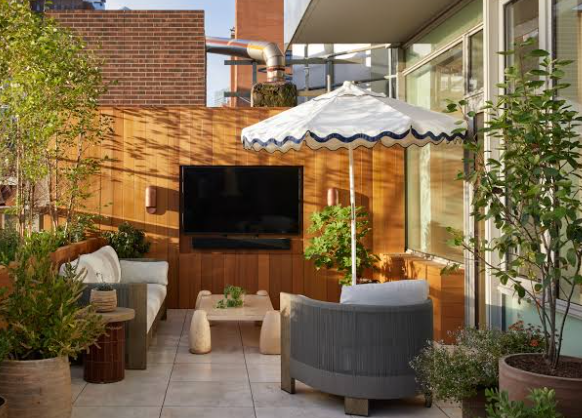
Rooftop gardens can turn unused urban space into a comfortable outdoor retreat. In dense cities where private yards are limited, rooftops offer valuable opportunities for growing plants, creating seating areas, improving privacy, and adding greenery above the street.
The best Urban Rooftop Garden Ideas balance appearance with practical considerations such as wind, sun exposure, drainage, irrigation, structural capacity, and maintenance. A successful rooftop garden does not need to be large. Even a compact roof terrace can become a relaxing and productive space with careful planning.
Start With a Clear Rooftop Layout
Before choosing plants or furniture, divide the rooftop into functional zones.
Common areas may include:
- Seating
- Dining
- Planting
- Storage
- Shade
- Walking paths
A clear layout prevents the rooftop from feeling crowded.
In a small space, multifunctional furniture can help. A bench with built-in storage, for example, can provide seating while hiding cushions, tools, or gardening supplies.
Keep major walkways open so people can move comfortably between doors, seating, and planted areas.
Use Large Planters to Define the Space
Large containers are one of the most useful elements in an urban rooftop garden.
They can hold trees, shrubs, ornamental grasses, herbs, and flowering plants while also helping divide different zones.
Tall planters can separate a dining area from a lounge space. Groups of containers can create a softer boundary without using solid walls.
Choose containers that are suitable for outdoor conditions and provide adequate drainage.
Lightweight planters may be preferable on rooftops because soil, water, containers, and plants can add significant weight.
For major installations, structural load limits should be confirmed by a qualified professional.
Choose Plants That Can Handle Rooftop Conditions
Rooftops often experience stronger wind, more direct sun, and faster soil drying than ground-level gardens.
Plant selection should reflect these conditions.
Drought-tolerant plants, ornamental grasses, hardy shrubs, herbs, and resilient perennials can work well in exposed locations.
Plants with flexible stems often perform better in windy conditions than fragile species.
Local climate should also guide your choices.
Using plants adapted to your region can reduce watering and maintenance requirements while improving long-term survival.
Create Privacy With Green Screens
Urban rooftops often overlook neighboring buildings, streets, or windows.
Plants can provide privacy without making the space feel closed.
Tall grasses, bamboo in containers, climbing vines, shrubs, or small trees can create natural screening.
Trellises can support climbing plants while using very little floor space.
Decorative panels can also be combined with greenery for additional coverage.
Instead of creating one tall solid barrier, consider layering plants of different heights. This usually produces a softer and more natural result.
Add Comfortable Rooftop Seating
A rooftop garden should provide somewhere comfortable to enjoy the space.
Outdoor sofas, lounge chairs, benches, or compact dining sets can all work depending on the available area.
Choose furniture designed for outdoor use and consider how it will perform in wind.
Heavy or securely positioned furniture is often more practical than lightweight pieces on exposed rooftops.
In smaller gardens, keep furniture proportions modest. Oversized sofas can quickly dominate the entire roof.
A few comfortable seats may be more useful than filling every available area.
Include Shade for Hot Days
Rooftops can become extremely hot during sunny weather because they receive little protection from surrounding trees.
Shade makes the garden more comfortable.
Options include:
- Pergolas
- Retractable awnings
- Shade sails
- Large umbrellas
- Trellises with climbing plants
A pergola can also help define an outdoor dining or lounge area.
If installing permanent shade structures, consider wind resistance and building requirements before construction.
Temporary shade options may be more suitable for smaller or rented properties.
Build a Vertical Garden
Vertical gardening is especially useful where rooftop floor space is limited.
Walls, fences, trellises, and freestanding frames can support plants without occupying large areas.
You can grow ornamental plants, herbs, flowering vines, or even certain vegetables vertically.
Green walls can also soften hard building surfaces and make a rooftop feel more enclosed.
For easier maintenance, choose a relatively simple vertical system with accessible irrigation.
Complex living walls may require more water, maintenance, and specialized installation than standard containers.
Grow Herbs and Vegetables
An urban rooftop garden can be decorative and productive at the same time.
Herbs such as basil, rosemary, thyme, mint, and parsley can grow well in containers.
Depending on climate and sunlight, rooftop planters may also support:
- Tomatoes
- Peppers
- Lettuce
- Strawberries
- Beans
- Radishes
Raised beds can provide more growing space than individual pots.
Place edible plants where they receive the appropriate amount of sunlight and where watering is convenient.
A small kitchen garden near a rooftop dining area can also make harvesting easier.
Use Raised Beds for Organized Planting
Raised beds help organize rooftop gardens and create a more permanent appearance.
They can be used for vegetables, flowers, grasses, or mixed planting.
Rectangular beds placed along rooftop edges can leave the central area open for seating.
Before installing large raised beds, consider their total weight when filled with wet soil.
Lightweight growing media specifically designed for rooftop applications may be useful.
Proper waterproofing and drainage are also essential so water does not accumulate around structures.
Make Drainage a Priority
Drainage is one of the most important parts of rooftop garden design.
Every container should allow excess water to escape.
Standing water can damage plants and may create problems for the building.
Avoid blocking existing roof drains with pots, leaves, furniture, or soil.
Larger rooftop landscape projects often require drainage layers, waterproof membranes, root barriers, and engineered growing systems.
These should be planned carefully with appropriate building or landscape professionals.
A beautiful rooftop garden will only remain successful if the roof underneath continues to function properly.
Plan an Efficient Irrigation System
Container plants can dry quickly in sunny and windy rooftop conditions.
Hand watering may be practical for a few pots, but larger gardens can benefit from drip irrigation.
Drip systems deliver water directly to the soil around plants and can reduce unnecessary evaporation.
Automatic timers may make watering more consistent.
Group plants with similar water requirements together so they can be irrigated efficiently.
It is also useful to check containers regularly, since rooftop weather can cause soil moisture levels to change quickly.
Add a Small Rooftop Dining Area
Dining outdoors can make a rooftop garden feel like an extension of the home.
A compact table with chairs may be enough for a small roof terrace.
Larger rooftops can support full dining areas positioned near outdoor kitchens, grills, or serving spaces where permitted.
Surround the dining area with planters to create separation from the rest of the roof.
A pergola or umbrella can provide shade above the table.
Choose furniture that is easy to maintain and appropriate for the local weather.
Use Natural Materials
Natural textures can help soften the concrete, metal, and glass commonly found in urban environments.
Wood decking, stone pavers, woven furniture, ceramic planters, and natural fabrics can make a rooftop garden feel more comfortable.
You do not need to cover the entire roof with one material.
A combination of decking, gravel, planters, and existing roof surfaces can create different zones.
When adding flooring, make sure it does not interfere with drainage or maintenance access.
Introduce Layered Planting
A rooftop garden feels more established when plants are arranged at different heights.
Use low groundcover plants near the front of containers, medium-height perennials in the middle, and taller shrubs or grasses behind them.
Small trees can provide additional height where structural conditions allow.
This creates depth and makes even a relatively small rooftop feel more like a complete garden.
Repeating several plant species across different containers can help unify the overall design.
Add Soft Outdoor Lighting
Lighting allows the rooftop to remain usable after sunset.
Consider low-level lighting around seating, paths, and planting areas.
Wall lights, rechargeable table lamps, lanterns, and carefully positioned outdoor fixtures can all work.
Avoid excessive brightness.
Soft lighting is usually more comfortable for dining and conversation while allowing the plants and skyline to remain visible.
Any permanent electrical installation should be suitable for outdoor conditions and installed safely.
Create a Minimalist Rooftop Garden
Not every rooftop needs dense planting.
A minimalist approach can work particularly well in modern urban settings.
Use a limited selection of plants, simple furniture, large containers, and clean lines.
For example, several tall grasses in identical planters can create privacy while keeping the space visually simple.
A neutral seating area and a few carefully placed trees may be enough to transform the roof.
This approach can also make routine maintenance easier.
Design a Rooftop Garden for Small Spaces
Small rooftops require careful use of every area.
Use narrow planters around the perimeter rather than large containers in the center.
Wall-mounted planting systems and vertical trellises preserve floor space.
A built-in corner bench can provide seating without requiring multiple chairs.
Folding furniture can also be useful when the rooftop serves several purposes.
Keep the number of materials and colors relatively limited so the garden does not feel visually crowded.
Use Plants to Support Urban Wildlife
Rooftop gardens can provide small pockets of habitat within cities.
Flowering plants may attract bees, butterflies, and other pollinators.
Native plants can be particularly valuable because local wildlife is often adapted to them.
Bird-friendly planting can include shrubs, grasses, and plants that provide seeds or shelter.
Avoid relying entirely on highly ornamental plants with little ecological value.
Even a modest rooftop garden can contribute to a broader network of urban green spaces.
Create a Rooftop Garden That Works Long Term
The most successful Urban Rooftop Garden Ideas combine attractive planting with careful planning.
Start with a functional layout, choose resilient plants, provide reliable irrigation, and protect drainage routes. Use planters, vertical gardens, privacy screens, seating, and shade to create a comfortable outdoor environment.
Structural capacity is especially important. Large trees, deep soil beds, water features, heavy planters, pergolas, and other permanent additions can add substantial loads, so significant rooftop changes should be reviewed by qualified professionals.
With the practical details addressed, even an ordinary city roof can become a productive garden, private retreat, outdoor dining area, or green gathering space above the urban landscape.