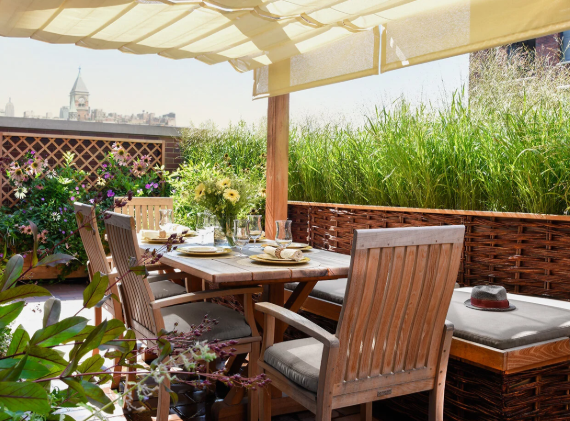
A rooftop can become much more than an unused architectural surface. With thoughtful planning, it can be transformed into a private garden, entertainment area, dining space, or quiet retreat above the city. In high-end residential and hospitality projects, rooftop gardens are increasingly designed as complete outdoor rooms rather than simple collections of planters.
The best Luxury Rooftop Garden Design combines refined materials, carefully selected plants, comfortable furniture, privacy, lighting, and functional zoning. At the same time, practical factors such as structural capacity, wind exposure, irrigation, drainage, and long-term maintenance must be considered from the beginning.
Start With a Sophisticated Layout
Luxury begins with planning.
A successful rooftop garden should be divided into clear functional zones rather than filled randomly with furniture and plants.
Common areas may include:
- Lounge seating
- Outdoor dining
- Kitchen or bar
- Private relaxation space
- Decorative planting
- Water features
- Walking paths
- Shade structures
Large rooftops can support several distinct areas, while smaller spaces should focus on fewer functions.
The layout should allow smooth movement between each zone without making the garden feel crowded.
Create a Strong Focal Point
High-end rooftop gardens often benefit from one dominant visual feature.
This could be a sculptural tree, water feature, outdoor fireplace, pergola, large planter arrangement, or dramatic seating area.
A focal point helps organize the surrounding landscape.
For example, a mature olive tree in a large architectural planter can become the center of a Mediterranean-inspired rooftop.
In a contemporary setting, a linear water feature or sculptural fire element can create a more modern composition.
The focal point should feel integrated into the overall design rather than added as an isolated decorative object.
Use High-Quality Materials
Materials strongly influence whether a rooftop feels ordinary or luxurious.
Natural stone, porcelain paving, hardwood decking, metal detailing, architectural concrete, and high-quality outdoor fabrics can create a more refined appearance.
Limit the number of materials used.
Too many different surfaces can make the rooftop feel visually complicated.
Instead, repeat a small selection throughout the design.
For example, stone flooring can coordinate with planter finishes, while wood from a pergola can be repeated in benches or tables.
Consistency creates a stronger sense of quality.
Choose Architectural Planters
Planters are essential in rooftop gardens because they contain soil while helping define the overall layout.
Luxury designs often use large, simple containers rather than many small pots.
Rectangular planters can create clean boundaries between seating and planting areas.
Oversized round containers can hold specimen trees or shrubs.
Finishes may include metal, stone-effect materials, fiberglass, ceramic, or architectural concrete.
Planters should also have adequate drainage and enough soil volume for the selected plants.
When filled with wet soil and mature plants, large containers can become extremely heavy, so structural limits must be considered carefully.
Add Statement Trees and Sculptural Plants
Plants with strong forms can give a rooftop garden a distinctive identity.
Small trees are particularly effective because they add height and make the space feel more established.
Depending on climate, suitable choices may include olive trees, Japanese maples, multi-stem shrubs, ornamental evergreens, or compact flowering trees.
Sculptural plants such as agave, yucca, clipped shrubs, and ornamental grasses can also create strong visual structure.
Instead of using many unrelated species, luxury landscapes often rely on a controlled plant palette repeated throughout the garden.
Design for Privacy
Privacy is especially important in high-end rooftop spaces.
Nearby buildings may overlook the roof, and exposed areas can feel uncomfortable without screening.
Tall planters, evergreen shrubs, ornamental grasses, pergolas, decorative panels, and climbing plants can create privacy.
Layering is usually more elegant than installing one completely solid wall.
For example, a slim architectural screen can be softened with climbing plants while tall planters provide additional coverage.
Privacy features can also help reduce the visual impact of surrounding buildings.
Include a Comfortable Lounge Area
A luxurious rooftop should feel as comfortable as an interior living room.
Outdoor sofas, deep lounge chairs, ottomans, and low tables can create a relaxed seating area.
Arrange furniture around a central feature such as a fire table, coffee table, or garden view.
Outdoor fabrics should be durable and appropriate for weather exposure.
Neutral upholstery often creates a sophisticated base, while cushions can introduce subtle seasonal color.
Furniture scale is important. Large rooftops can accommodate substantial seating, but smaller spaces benefit from streamlined designs.
Create an Outdoor Dining Space
An outdoor dining area allows the rooftop to function as an extension of the home.
A long dining table may suit large gatherings, while a round table works well in more compact spaces.
Place the dining area close to an outdoor kitchen or service zone if one is included.
A pergola, canopy, or large umbrella can provide shade.
Decorative planting around the dining area can create a sense of enclosure while maintaining openness.
Choose furniture that is stable enough for rooftop wind conditions.
Add an Outdoor Kitchen or Bar
For rooftops designed for entertaining, an outdoor kitchen can become a major feature.
Depending on the project, it may include:
- Grill
- Countertop
- Refrigerator
- Sink
- Storage
- Bar seating
Materials should be durable and resistant to outdoor exposure.
A bar can also serve as a transition between the cooking and lounge areas.
Any gas, electrical, plumbing, or ventilation work should be designed and installed according to local building requirements.
Incorporate a Pergola
Pergolas add architectural structure and help define outdoor rooms.
They can provide partial shade above dining areas, lounges, or outdoor kitchens.
Modern pergolas often feature clean metal or wood frames.
Retractable roofs, adjustable louvers, or integrated screens can increase flexibility.
Climbing plants can soften the structure and create a more garden-like appearance.
Because rooftops can experience strong wind, permanent shade structures require careful engineering and secure installation.
Use Water Features Carefully
Water can introduce movement and sound into a rooftop garden.
A narrow reflecting pool, small fountain, water wall, or sculptural basin can become an elegant focal point.
Simple designs often work better than elaborate fountains in contemporary rooftop spaces.
Water features also add significant weight, particularly when large volumes of water are involved.
Structural capacity, waterproofing, drainage, and maintenance should therefore be evaluated before installation.
A compact feature can often provide the desired effect with fewer technical complications.
Add a Fire Feature
Fire features can make rooftop gardens more comfortable during cooler evenings.
Linear gas fireplaces, fire tables, and modern fire bowls can provide warmth while creating a strong visual center.
They work especially well in lounge areas.
Keep combustible materials and planting at appropriate distances.
Fire features should always comply with local safety rules and building requirements.
In some properties, open flames may not be permitted, so electric or alternative heating solutions may be more appropriate.
Use Layered Planting
Layered planting makes a rooftop feel more like a real garden.
Combine plants of different heights.
For example:
Tall trees or screening shrubs can create the upper layer.
Medium-height grasses and perennials can form the middle.
Lower groundcover plants can soften planter edges.
Repeating these layers across the rooftop creates depth and continuity.
A luxury garden does not need to contain a large number of species. A limited palette used consistently often creates a more sophisticated result.
Introduce Subtle Outdoor Lighting
Lighting is essential for extending the use of a rooftop into the evening.
Rather than making the entire space equally bright, use different levels of illumination.
Possible options include:
- Path lighting
- Planter lighting
- Wall lights
- Pergola lighting
- Table lamps
- Step lights
- Accent lighting around trees
Lighting should help people move safely while highlighting selected architectural and planting features.
Avoid excessive brightness, especially in lounge and dining areas where softer illumination generally feels more comfortable.
Create a Minimalist Luxury Garden
Luxury does not always require elaborate decoration.
Minimalist rooftop gardens can feel highly refined when materials and proportions are carefully controlled.
Use clean paving, large architectural planters, sculptural plants, and simple furniture.
A limited color palette can make the garden feel calm and organized.
For example, pale stone paving, black metal details, natural wood furniture, and green planting can create a strong contemporary composition.
The quality of individual elements becomes more important when the design is simple.
Add an Infinity-Edge Pool or Spa Where Suitable
Large luxury rooftops may include pools, plunge pools, or spas.
These features can create a resort-like atmosphere, particularly when positioned toward panoramic views.
However, they require significant structural and technical planning.
Water creates substantial loads, and rooftop pools also require waterproofing, drainage, mechanical equipment, and safe access.
Such features should only be considered when the building has been professionally evaluated and designed to support them.
Smaller spas or plunge pools may provide a similar experience with reduced space requirements, but they still require engineering review.
Frame the Best Views
One of the main advantages of rooftop gardens is their elevated perspective.
Furniture and planting should be positioned to take advantage of the strongest views.
Low planting can preserve sightlines toward skylines, mountains, water, or surrounding architecture.
Tall screening plants should be placed strategically so they block undesirable views without hiding attractive ones.
A seating area facing the best view can become one of the most memorable parts of the garden.
Plan Irrigation and Drainage Carefully
Luxury appearance depends on long-term performance.
Plants should remain healthy, surfaces should drain properly, and maintenance should be manageable.
Drip irrigation is often effective because it delivers water directly to containers and planting beds.
Automatic irrigation can also reduce daily maintenance.
Roof drains must remain accessible and free from obstructions.
For extensive landscaping, waterproof membranes, drainage layers, and root barriers may be necessary.
These technical systems should be treated as part of the design rather than added after construction.
Consider Wind Exposure
Wind can be one of the biggest challenges in rooftop garden design.
Tall buildings may experience much stronger winds than gardens at ground level.
Use heavy furniture or secure lightweight items.
Plants should be selected for their ability to tolerate exposure, and trees may require stabilization during establishment.
Permeable screens can help reduce wind without creating excessive pressure against solid barriers.
Pergolas and other structures should also be engineered for local wind conditions.
Design for Long-Term Maintenance
A luxury garden should not require excessive effort to remain attractive.
Choose plants suited to the local climate and rooftop conditions.
Limit highly demanding species unless professional maintenance is available.
Use durable outdoor materials that age well.
Provide easy access to irrigation equipment, drains, storage areas, and planting beds.
Planning maintenance from the beginning helps prevent the rooftop from becoming difficult or expensive to manage later.
Create a Refined Rooftop Retreat
The most successful Luxury Rooftop Garden Design combines elegant appearance with careful engineering and practical planning.
Large planters, statement trees, comfortable lounge furniture, refined materials, privacy screens, dining areas, and subtle lighting can transform a roof into a sophisticated outdoor living space.
The key is restraint. Rather than filling every available area, select a smaller number of high-quality elements and organize them around a clear layout.
Structural capacity, drainage, waterproofing, irrigation, and wind resistance should always be considered before major rooftop installations.
When these practical details are handled correctly, a rooftop can become a private garden retreat that feels as carefully designed and comfortable as any interior room.