Near the courtyard of Wojdács Castle in Budapest City Park, a bronze figure in a long robe and hood sits quietly among the trees. This statue, commonly known as Statue Des Anonymus, or more commonly, Anonymus Statue, commemorates Anonymus, the anonymous medieval Hungarian chronicler, and is one of the most recognizable garden sculptures in the city park. The statue, along with the castle architecture, tree-lined paths, and courtyard greenery, creates a historically rich public landscape.
From Commemorative Statue to Garden Visual Focal Point
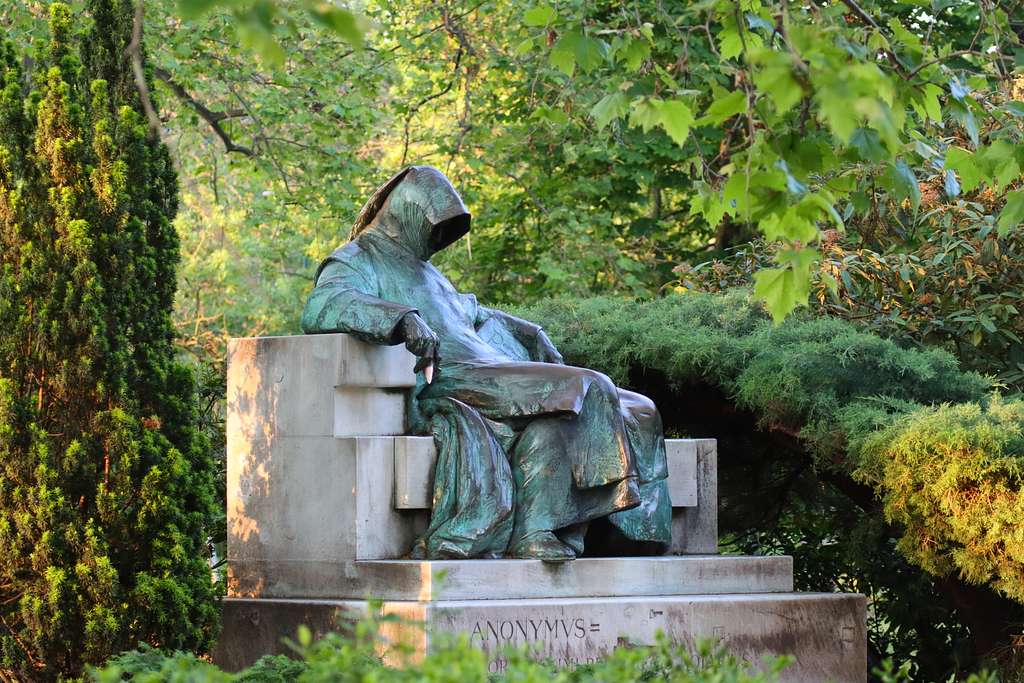
Anonymus is believed to be the author of the Latin work Gesta Hungarorum, and once claimed to be a scribe for a Béla king, but his real name and complete biography remain unknown. Therefore, the sculpture does not employ the common method of a clear portrait, but rather hides the figure’s face deep within the hood.
From a garden landscape perspective, this form has a strong visual focal point. The wide robe forms a stable triangular silhouette, and the seated posture lowers the overall height of the statue, preventing it from overly imposing on its surroundings. The figure’s contemplative posture, with head bowed, is more suited to the quiet courtyard space than a heroic statue standing tall.
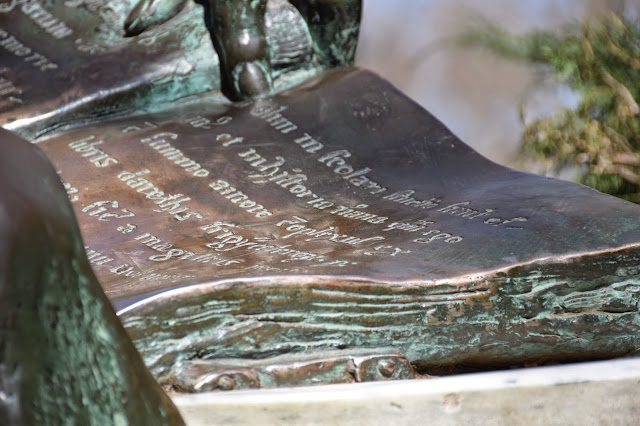
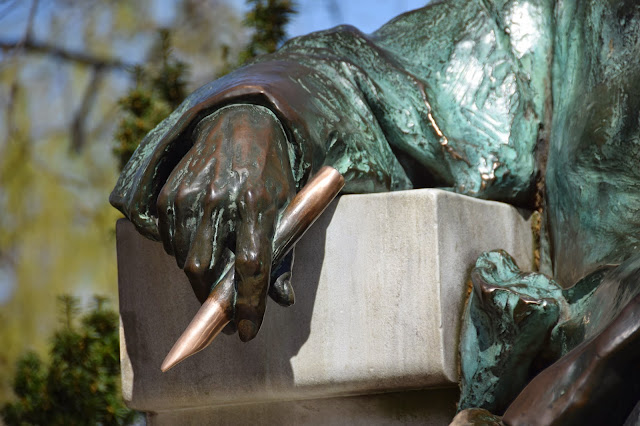
As visitors approach along the path, they first see the dark, complete silhouette of the figure; only upon closer inspection do they notice the blurred face, the folds of clothing, and the writing implements in his hands. This gradual approach makes the statue a natural focal point within the garden.
The Tree Background Enhances the Statue’s Mystique
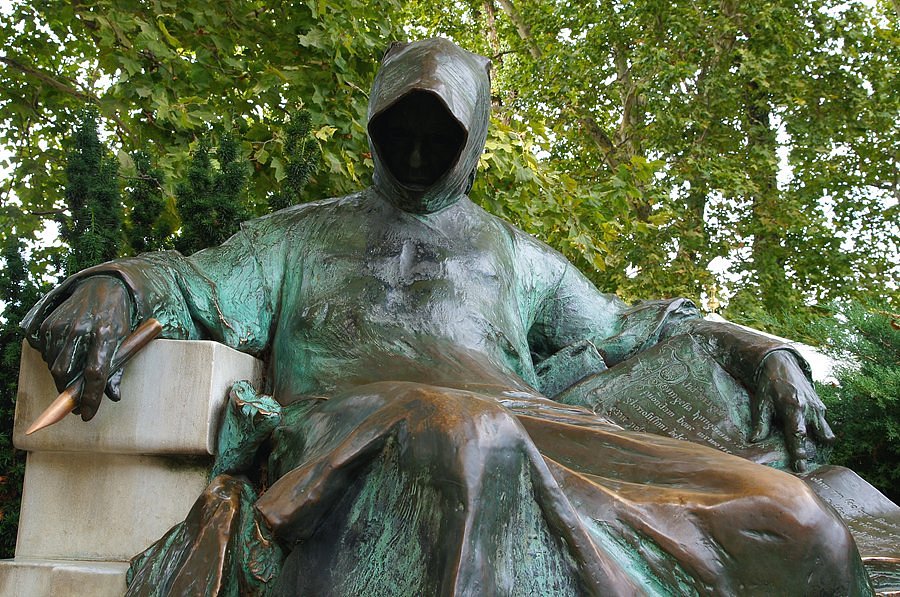
The Statue Des Anonymus is not situated in the center of a completely open square, but rather in an environment where a city park connects with the Wojdach Castle. The surrounding trees, grass, and shrubs create a softer backdrop for the statue, distinguishing it from the bustling city streets.
The vertical lines of the tree trunks echo the statue’s low-hanging hood and flowing robes. The foliage softens the starkness of the architectural walls, making the bronze figure appear as if he is reading and contemplating in a quiet historical courtyard.
As the seasons change, the garden backdrop also alters the overall impression of the statue. In spring and summer, the dense foliage surrounds the figures in a green environment; in autumn, fallen leaves harmonize better with the bronze surface; and in winter, the exposed branches accentuate the silhouettes of hoods and robes. Plants are not merely decorations, but an essential component in shaping the atmosphere of the work.
Castle Architecture and Sculpture Form a Historical Scene
Wojdács Castle was originally built for an exhibition related to Hungary’s millennium celebrations in 1896, later rebuilt with permanent materials. The complex blends Romanesque, Gothic, Renaissance, and Baroque styles, one purpose being to showcase different stages in the development of Hungarian architecture.
The Budapest Anonymous Sculpture is not randomly placed within this architectural environment. The castle recreates national history through its architectural elements, while the anonymus represents those who record and tell history. Spires, arches, stone walls, and hoods and robes together create a visual scene reminiscent of medieval narratives.
This pairing also illustrates that sculptures in gardens should be related to the theme of the site. If the same work were placed in a modern commercial plaza, it would still have aesthetic value, but the historical atmosphere would be significantly diminished. Near Wojdach Castle, sculptures, architecture, and plants work together to create a complete spatial expression.
Inspiration from Garden Sculpture Placement
Statue Des Anonymus provides a valuable case study for garden sculpture design. First, the sculpture’s scale harmonizes with the courtyard space, avoiding any obstruction of the architecture due to its excessive size. Second, sufficient viewing distance is maintained, allowing visitors to observe the figure’s posture from the front, side, and rear.
The pedestrian space near the statue also serves as a guide. Visitors can naturally discover the work while exploring the castle courtyard without having to enter a closed exhibition hall. The courtyard of Wojdach Castle and the Anonymus statue can often be explored as outdoor areas, making public art an integral part of the park’s daily experience.
In modern parks, campuses, cultural courtyards, or historically themed gardens, sculptures should not be isolated. Designers can establish complete sightlines through tree height, paving direction, seating placement, and architectural background, making the sculpture an integral part of the spatial narrative.
The value of Statue Des Anonymus comes not only from its mysterious, anonymous artist but also from its natural and stable relationship with the garden environment. The figures’ hidden faces draw visitors closer, while the trees, walkways, and castle architecture complete the viewing experience. This work illustrates that a successful outdoor sculpture must not only depict figures but also thoughtfully respond to its surroundings.